Multi-Year Partnership Enhancing the Patient Digital Experience
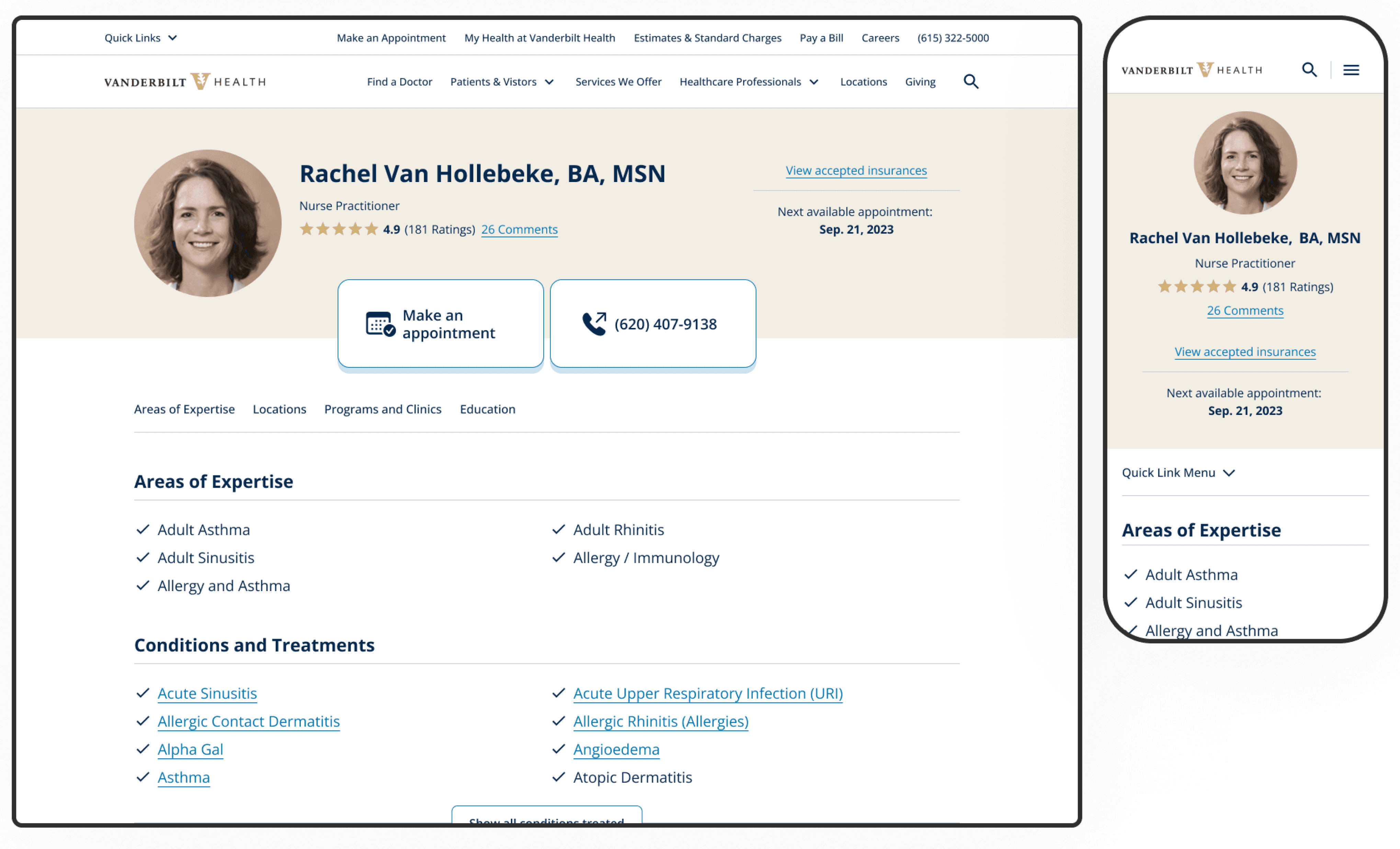
Vanderbilt Health is an academic medical center sitting as a healthcare leader in the southeastern US. Their ongoing work with Modea was to maintain and enhance their expansive digital portfolio of responsive web platforms, including their major patient consumer sites.
Business Objectives
Simplify technical architecture.
Identify user journey and engagement gaps.
Ultimately enhance the patient experience.
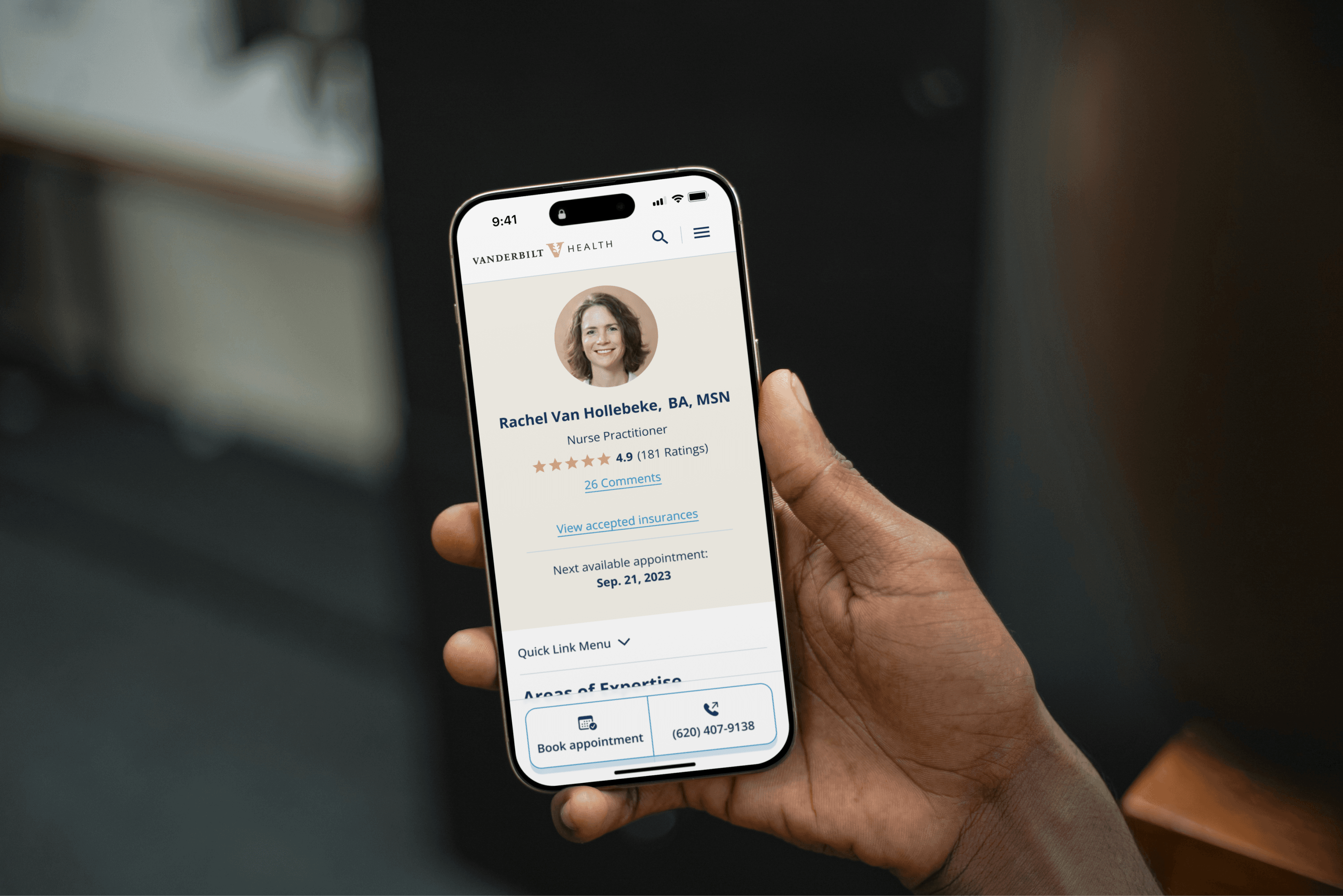
Impact
56% traffic increase over 5 months while maintaining a user-centered experience
Multi-year contract renewal with Vanderbilt considering our services a core business expense
Identified critical user journeys and their business value
Streamlined delivery workflows that improved implementation efficiency
User Research Foundation
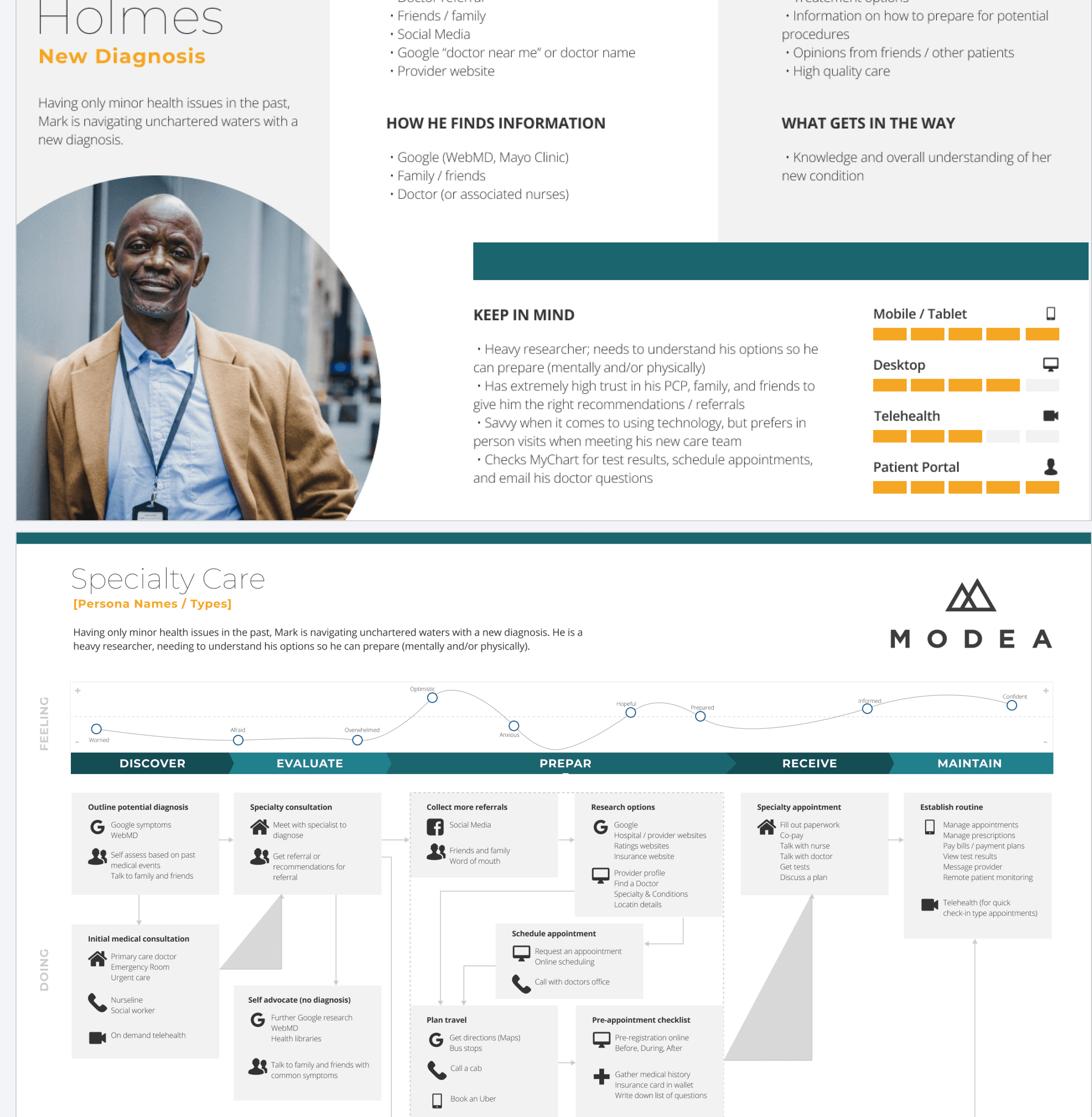
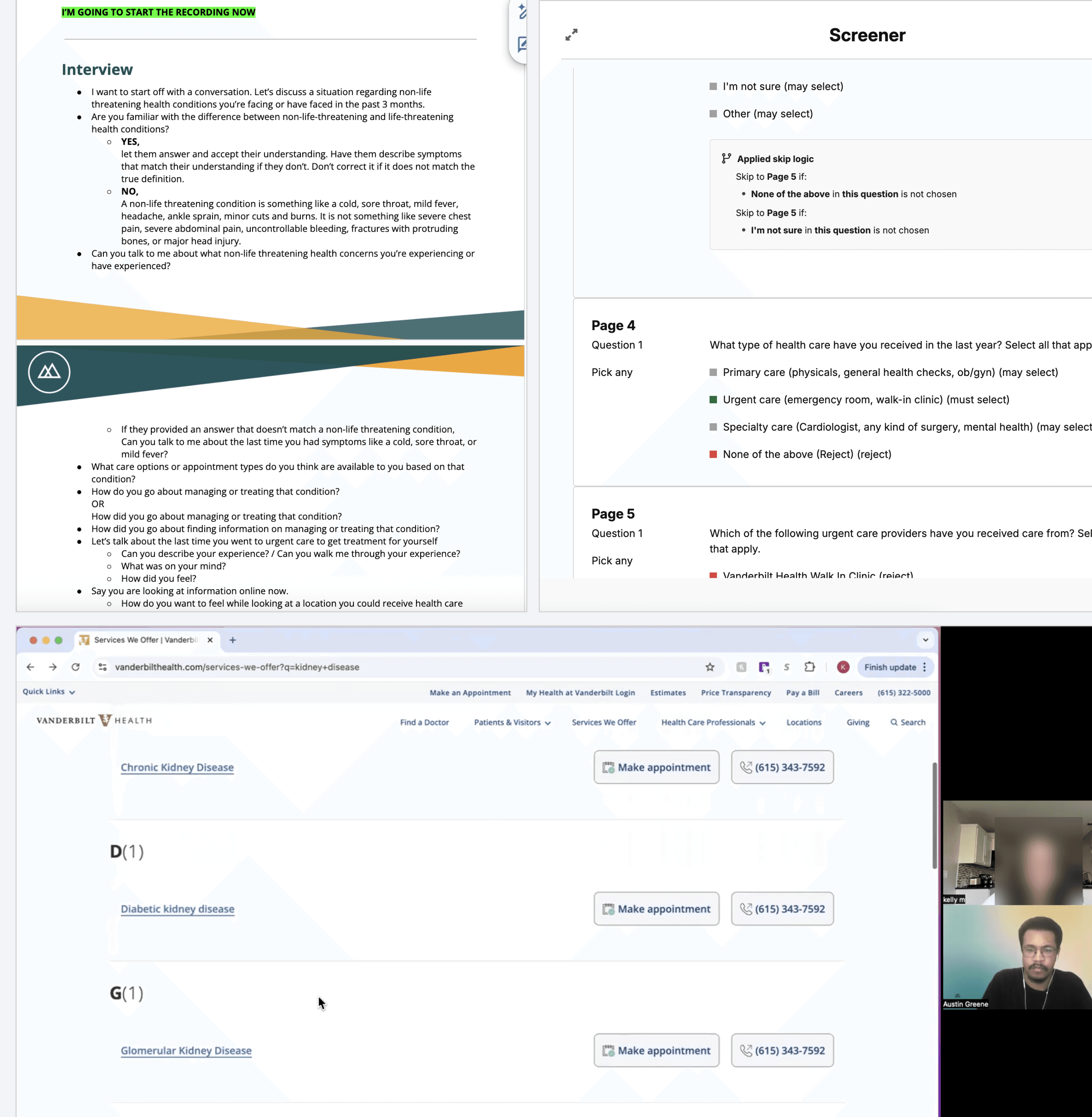
Over 3 years, I facilitated 1:1 interviews and moderated usability tests to build a comprehensive understanding of Vanderbilt's users. I helped define five distinct types of patients, including:
Primary care patients that are mobile-first users focused on convenience. They prioritize close proximity to care and easy scheduling. Most haven't established a care team and default to urgent care when needs arise.
New specialty diagnosis patients who are heavy researchers that need to understand their options. They trust their primary care provider's recommendations and prefer in-person communication, though they're comfortable with digital tools in their care journey.
My research process included aligning on research questions, gathering baseline analytics, defining test parameters, recruiting ideal candidates, and creating screener and interview guides. This work established a continuous research and implementation cycle.
Patient Dissatisfaction With Referral Only Services
Key Insights
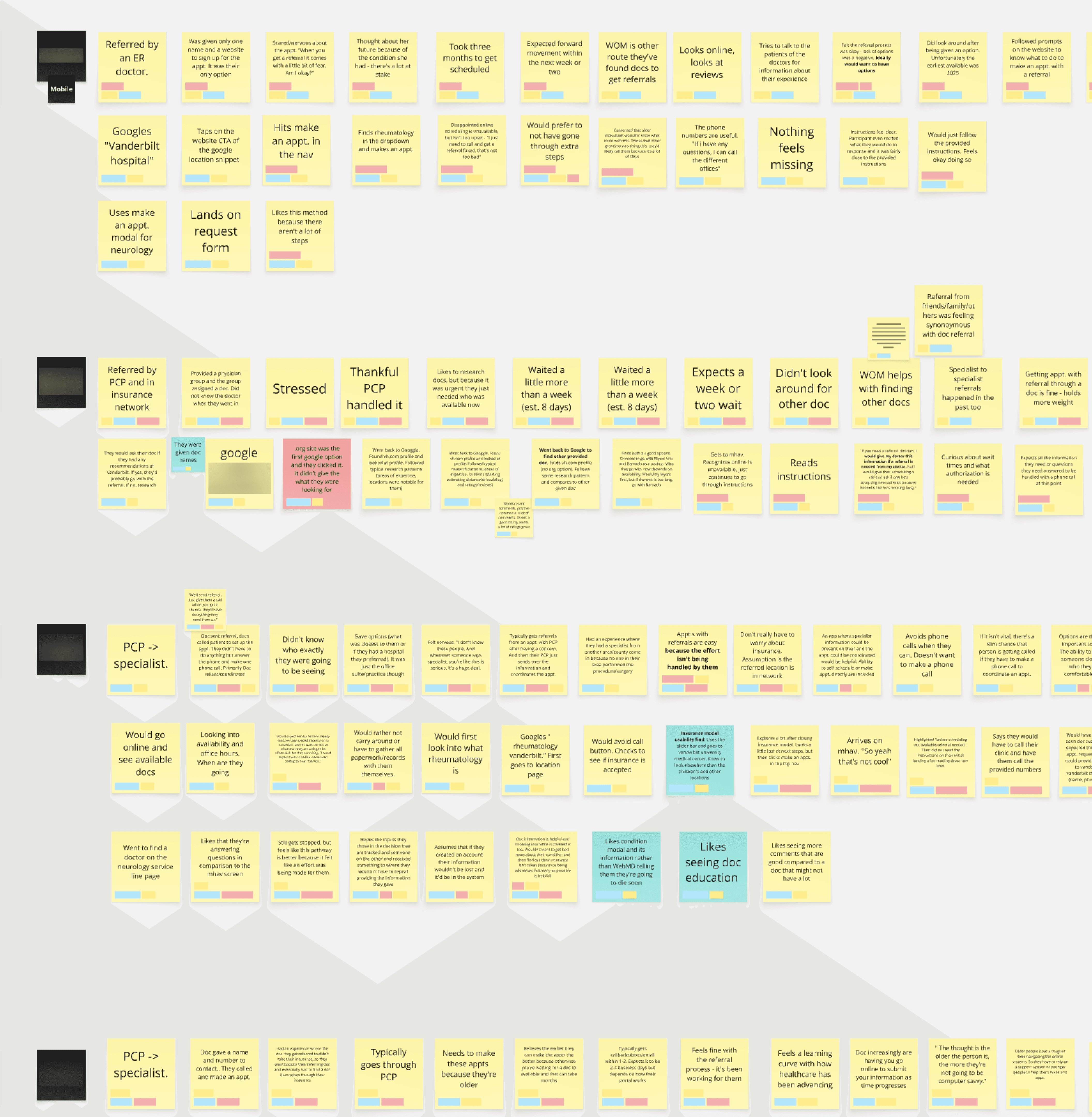
User testing validated that the experience was failing. The root issues were faulty expectation setting and false progress signals.
Patients described the experience as "not online friendly, not accessible, cumbersome, and a dead end"
They expected to schedule online and see doctor availability
While disappointed, they wouldn't abandon scheduling due to medical necessity
The referral requirement itself wasn't the issue—convenience and efficiency mattered most
Patients responded more positively when their doctor handled referrals
Efficient medical record transfer was critical to a smooth experience
Innovating Online Scheduling
Vanderbilt's scheduling tool (MyChart Epic) was governed by another team, so we couldn't modify its content or functionality. Our solution needed to integrate seamlessly with the overall scheduling experience and work for all service lines offering online scheduling.
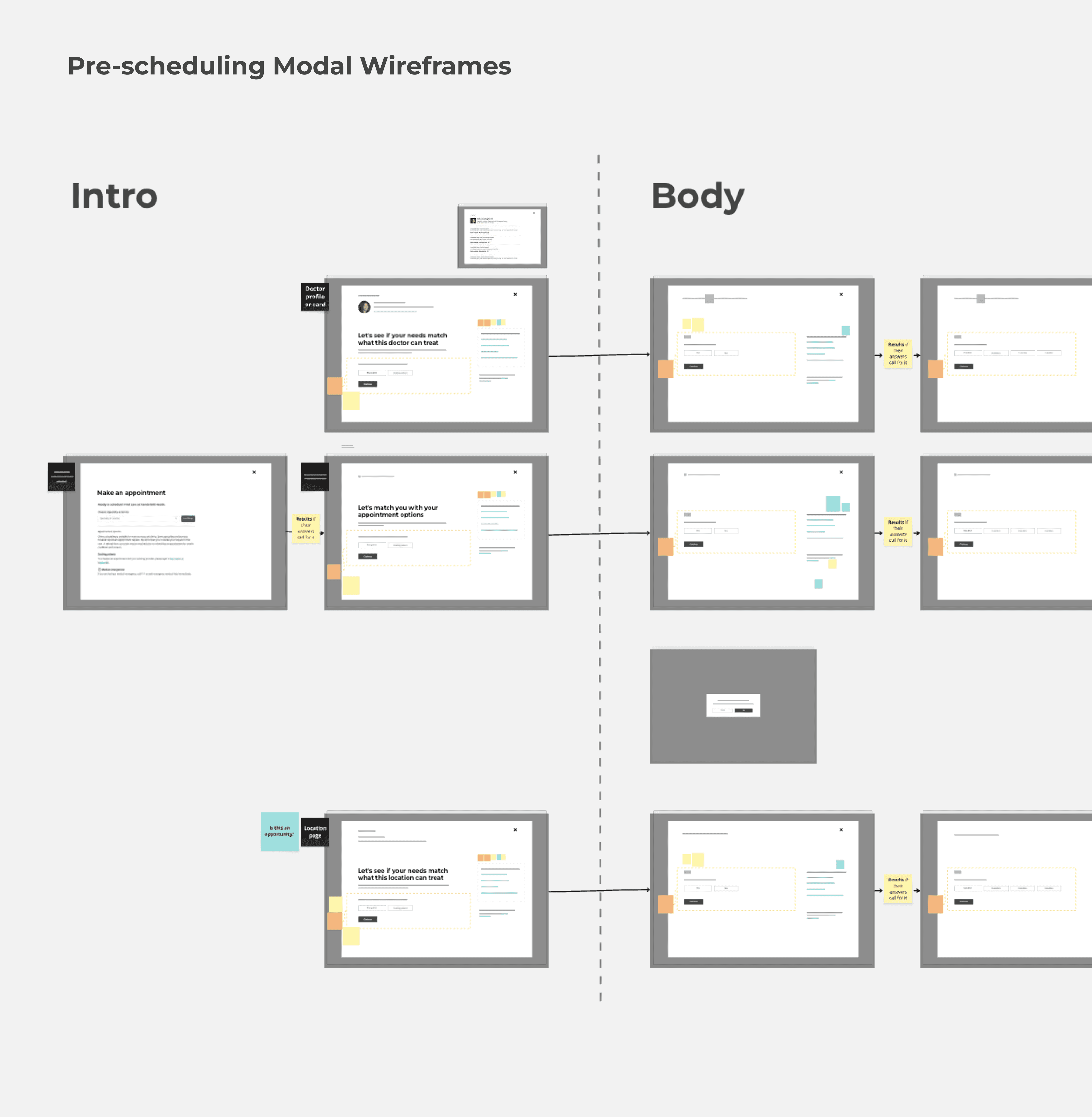
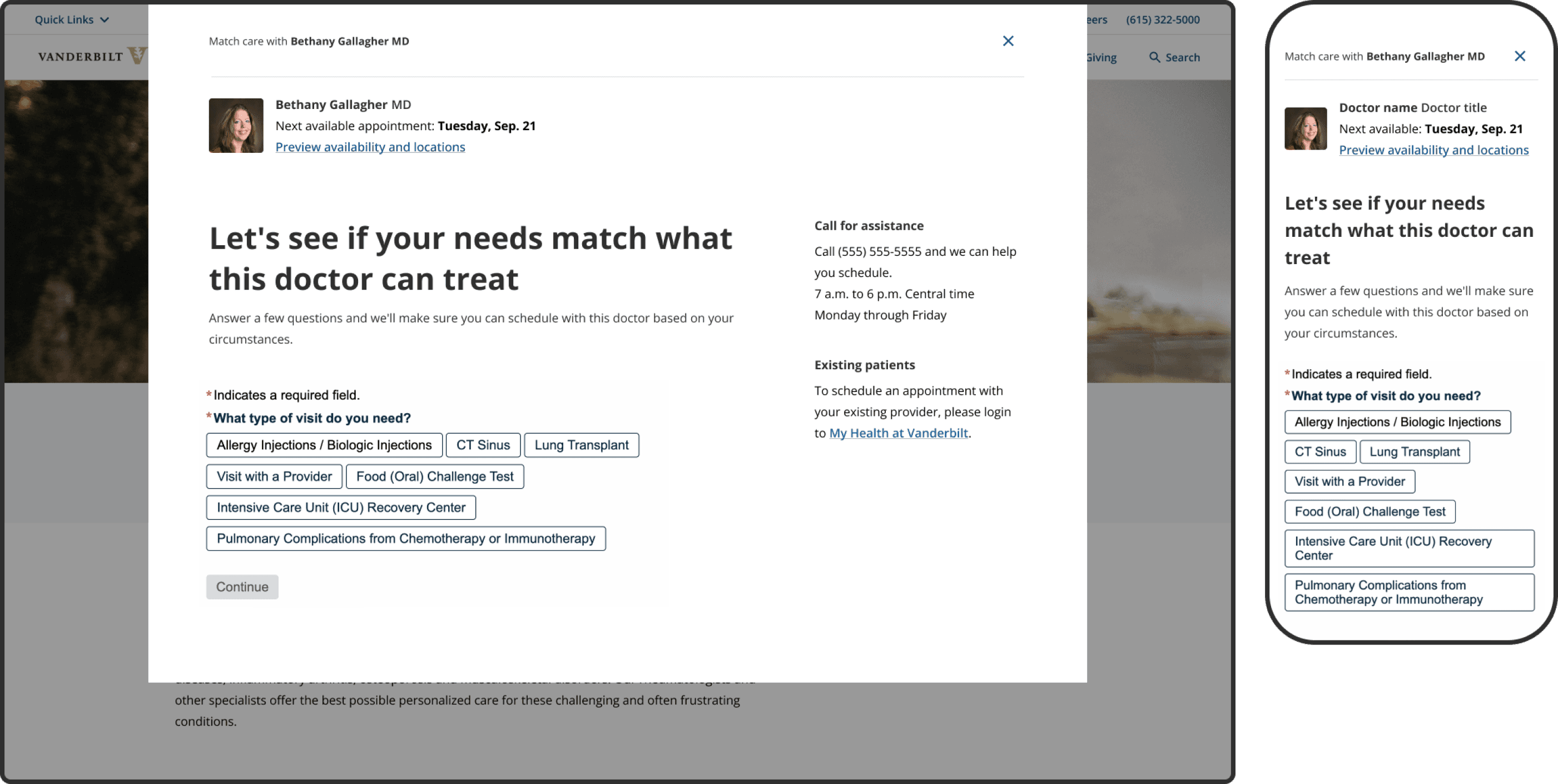
I conceptualized a pre-scheduling modal that introduced digital patient triage on their home website rather than an isolated page. We couldn't alter what users saw, but we could change the context in which it displayed.
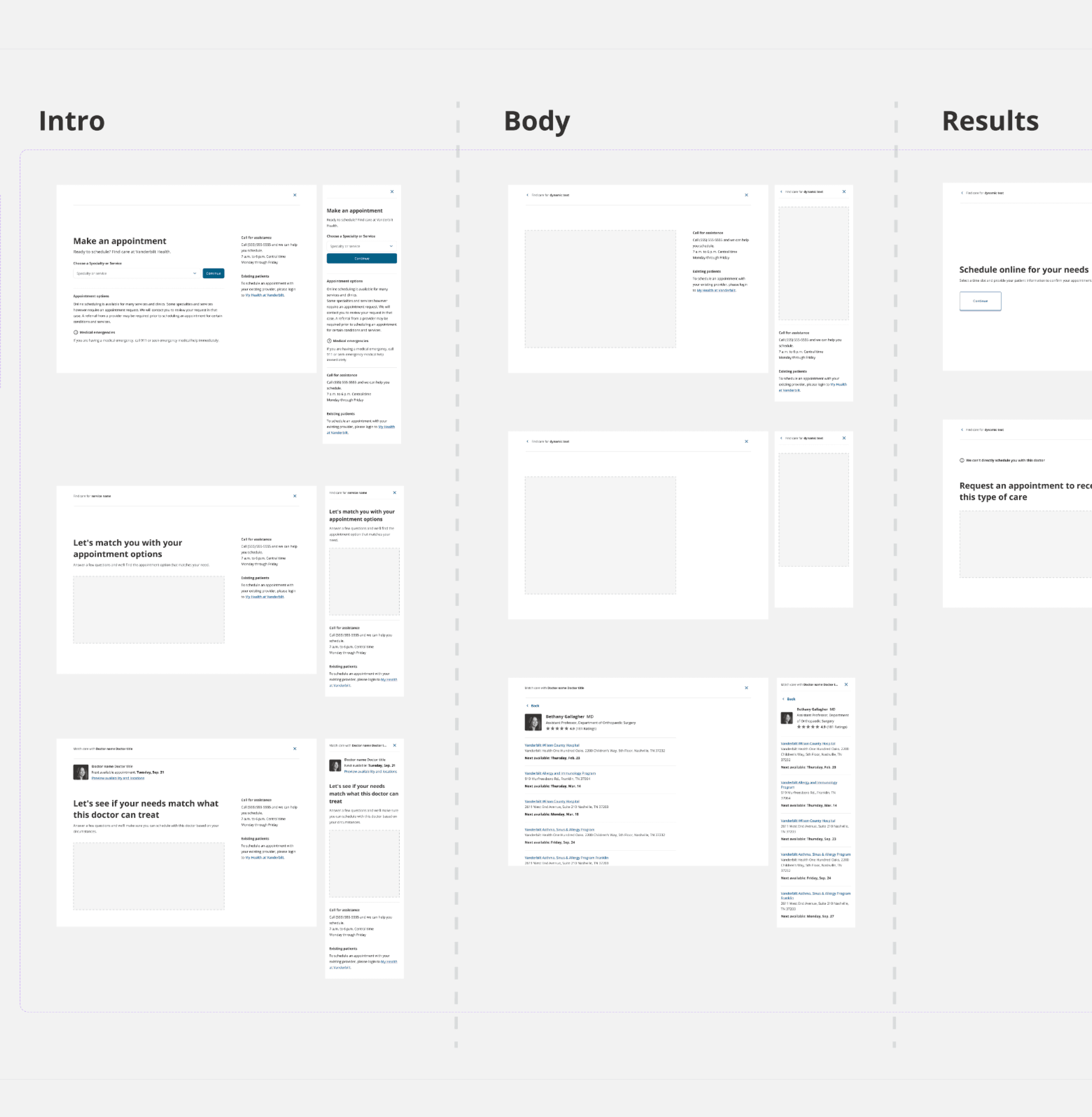
I created wireframes mapping entry points, questionnaire decision trees, and modal end screens. I reviewed these with development to confirm technical feasibility.
The existing tool performed two distinct objectives—assessing patient fit and online scheduling. The new modal displayed the assessment phase on-site and only transitioned to a new tab once scheduling was possible. This properly set expectations and communicated realistic progress.
Design decisions:
Introduced "matching care" language to ground expectations from the start
Changed button text from "make an appointment" to "learn about scheduling" for referral-only services
Ensured patients understood their likely outcome before engaging with the flow
Design System & Process Improvement
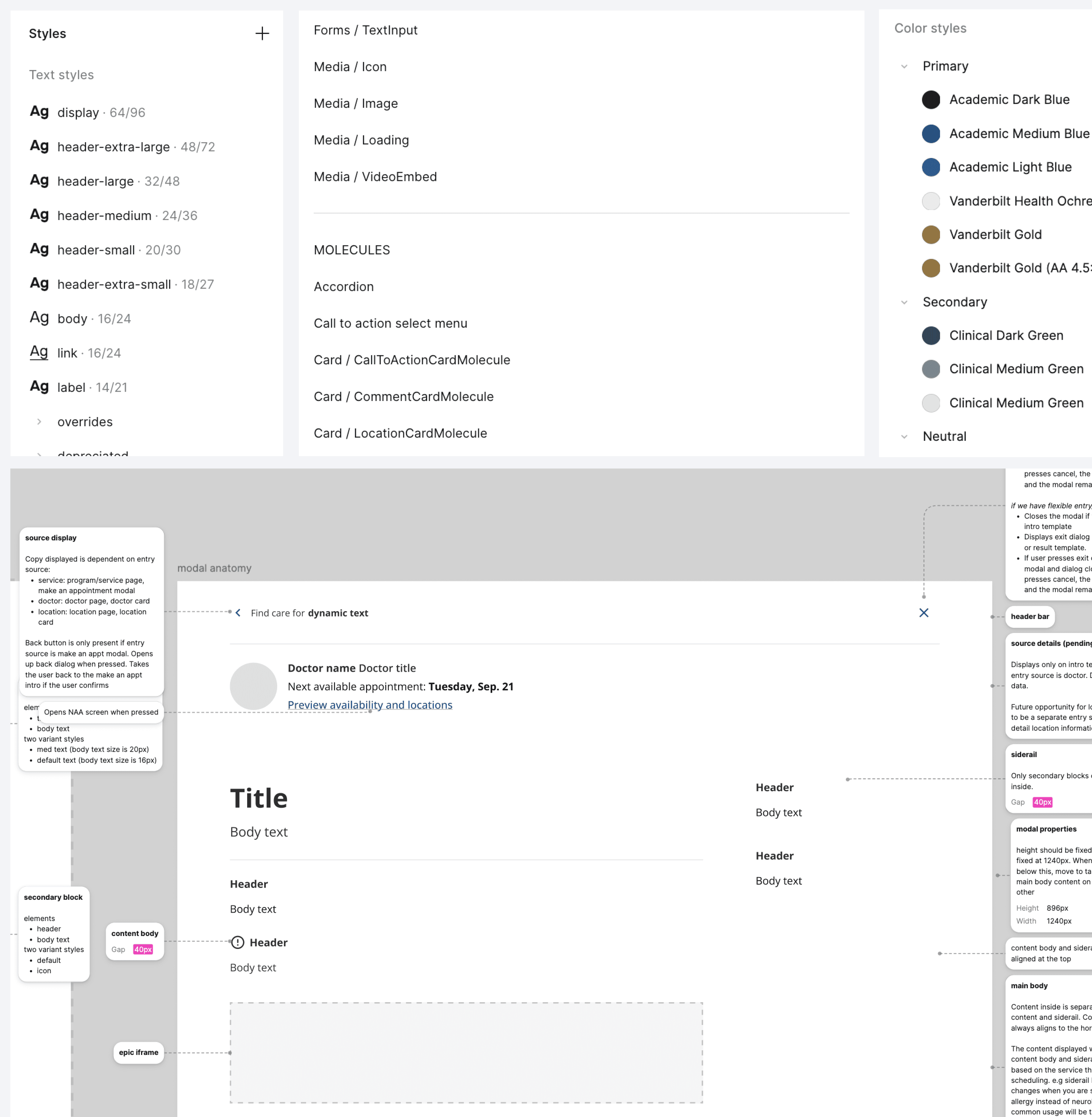
Implementing solutions such as the prescheduling modal came with challenges. Structure between live code and design intentions was lacking at the time. Development slowed, code bloated, and inconsistent experiences shipped.
I facilitated team conversations to understand needs, built Vanderbilt's first comprehensive design system, and initiated new delivery processes.
The system and governance included:
Visual standards
Complete component rebuild in Figma
Regular design sync meetings
Specifications for annotations and design documentation
Improved design task story pointing and splitting
It resulted in improved workflow efficiency, reduced development time, leaner technical architecture, and streamlined product delivery.
Design System Maturity
Vanderbilt planned to merge 400+ disparate digital sites and needed governance and structure. Requirements included individualized department branding, template-based page creation, and a component-based editor experience.
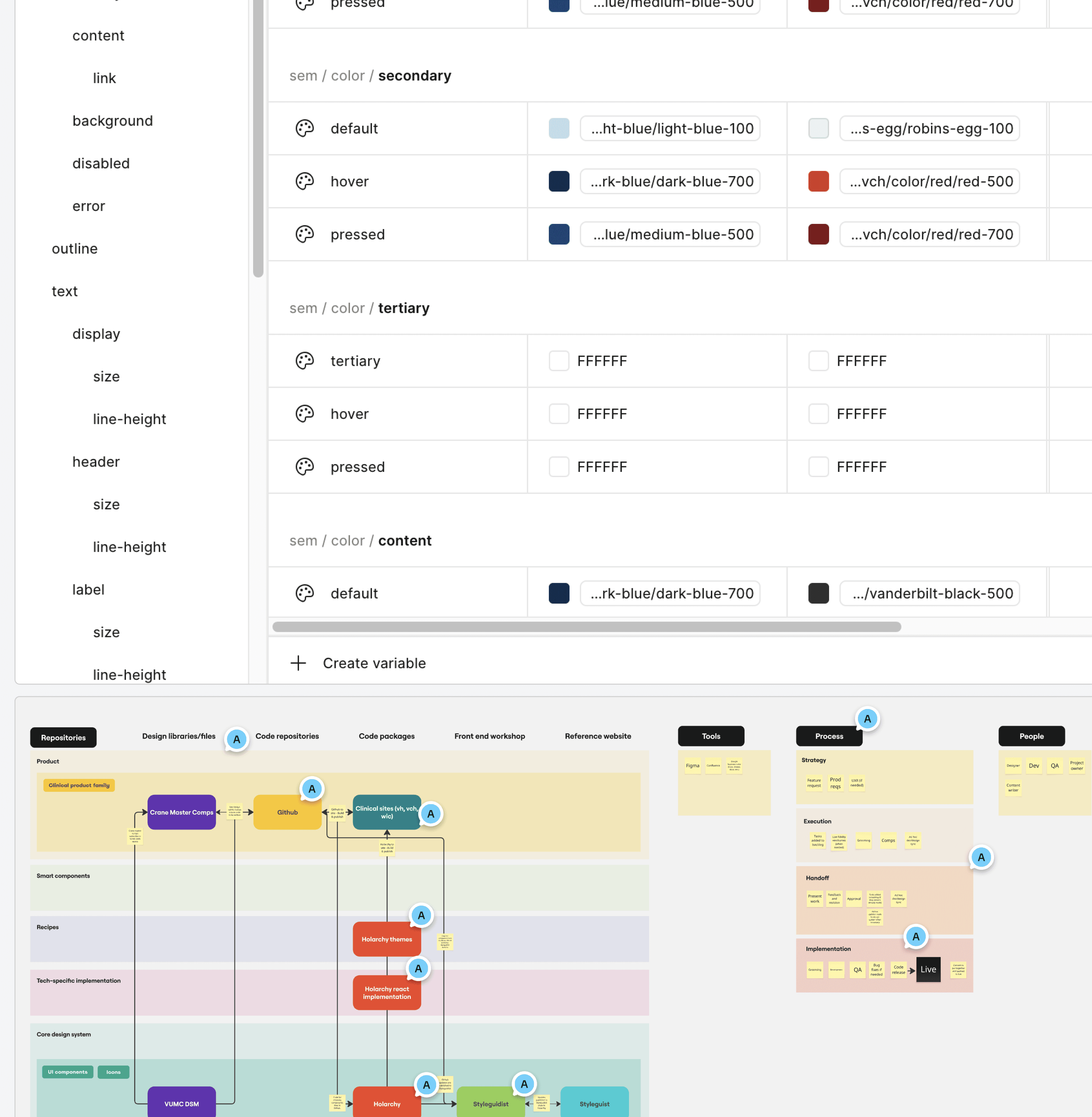
I pitched maturing the design system and positioning it as critical infrastructure in their digital portfolio. My proof of concept demonstrated team workflow mapping, token system structure, and evolution of modularity.
Austin Wallace Greene © 2026